-RGB.jpg?w=1413&h=279)
.png?w=1664&h=688)
Choosing an engagement ring for your partner can feel difficult because the ring has to do more than look beautiful. It should feel like something they would naturally choose for themselves.
The easiest way to narrow down the options is to look beyond trends and focus on a few practical clues: the jewelry they already wear, the shapes they are drawn to, how much sparkle they prefer, and how active their everyday life is.
A good engagement ring should feel personal before it feels impressive.
Start With Their Everyday Jewelry Style
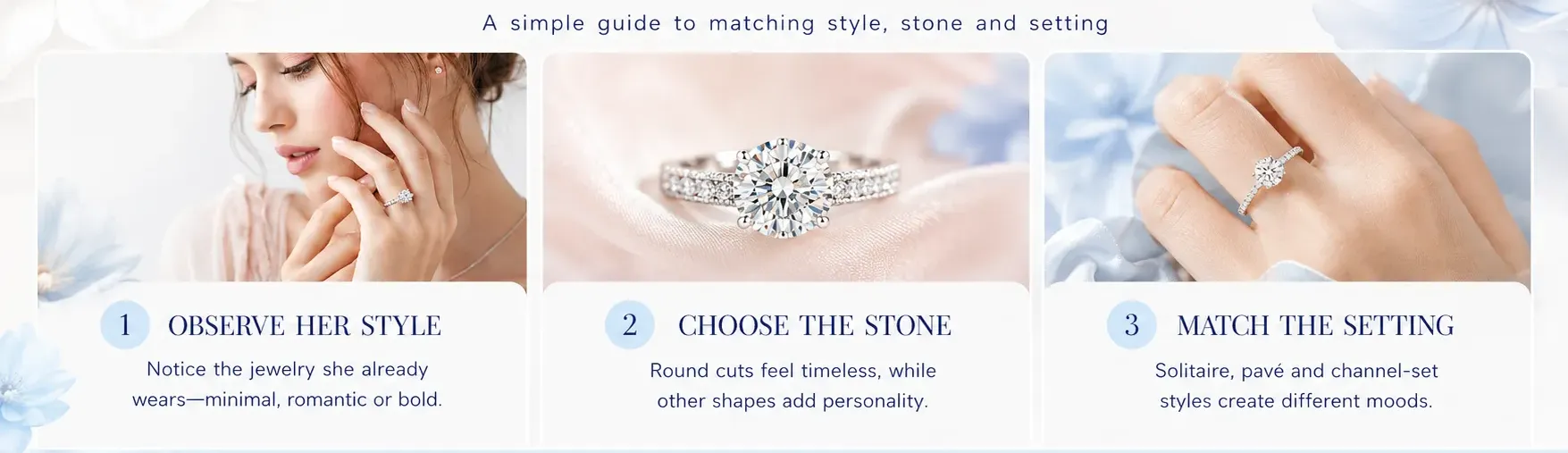
Before comparing carats or settings, look at what your partner already wears.
Do they usually choose delicate silver jewelry, simple bands and small earrings? That often points toward a cleaner solitaire or fine channel-set design. If they prefer layered necklaces, statement rings or detailed accessories, they may feel more comfortable with pavé, halo or twisted styles.
Also notice their metal preference. Someone who almost always wears cool-toned jewelry may naturally gravitate toward white gold or silver-colored settings, while someone who prefers warmer accessories may appreciate yellow or rose gold.
MomentWish’s moissanite engagement rings include solitaire, channel-set, halo, three-stone and more decorative designs, which makes it easier to compare several visual directions before choosing one.
The goal is not to surprise them with a completely different style. The safest surprise usually feels like an elevated version of something they already love.
Understand What Makes Moissanite Different
Once you understand their general style, consider the center gemstone.
Moissanite has become a popular engagement-ring option because it offers strong brilliance, durability and a distinctive amount of fire. GIA notes that moissanite is a diamond simulant with different optical and physical properties from diamond, so it should be chosen because you genuinely like its appearance rather than simply treating it as a substitute.
MomentWish primarily uses lab-created moissanite in its engagement jewelry, with many current designs described as D color and VVS1 clarity.
If your partner loves noticeable sparkle, moissanite can be especially appealing. If they prefer restrained jewelry, focus less on carat size and more on a simple band and clean setting.
This is why a promise ring moissanite style can look very different from a formal proposal ring even when both use the same gemstone: the emotional meaning and overall design matter just as much as the stone.
Choose a Stone Shape That Matches Their Personality
Stone shape often creates the first emotional impression.
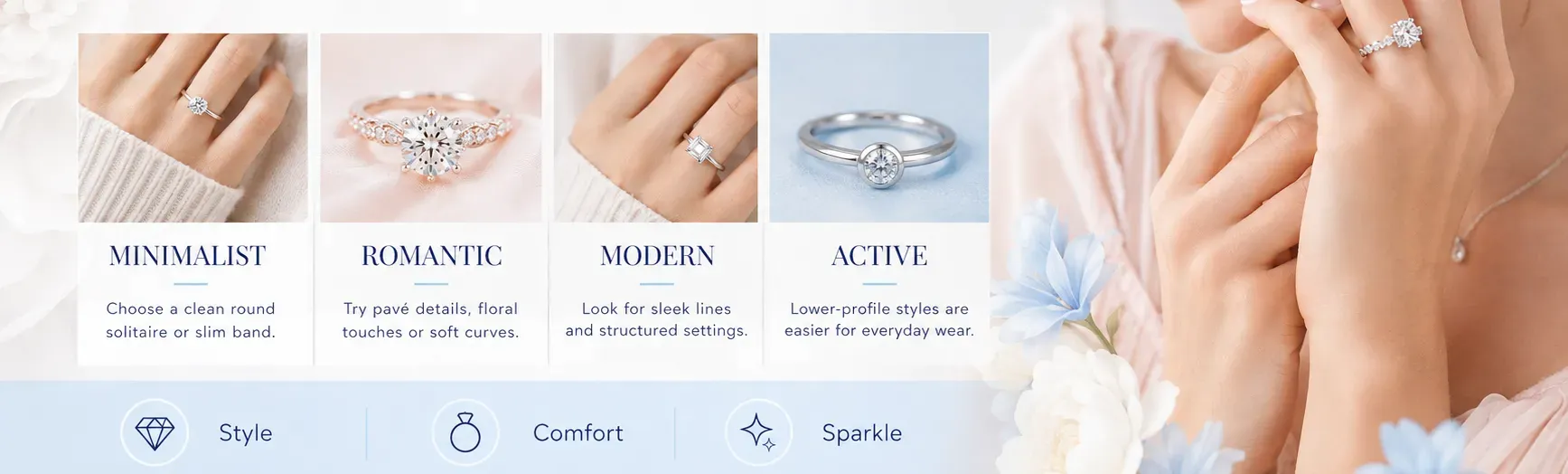
A round center stone feels classic, balanced and immediately recognizable as bridal jewelry. A round engagement ring is usually a safe direction when your partner prefers timeless clothing, simple accessories and designs that are unlikely to feel dated.
A round cut engagement ring can still be personalized through the setting. MomentWish currently pairs round stones with solitaire, halo, channel-set and twisted styles, so choosing round does not mean choosing something generic.
Other shapes create different personalities. Cushion cuts feel softer and romantic, pear shapes feel more distinctive and elongated, while emerald cuts create a cleaner, architectural look.
GIA recommends considering both shape and cut style when buying an engagement ring because the outline has a strong effect on the finished design.
Let the Setting Control the Mood
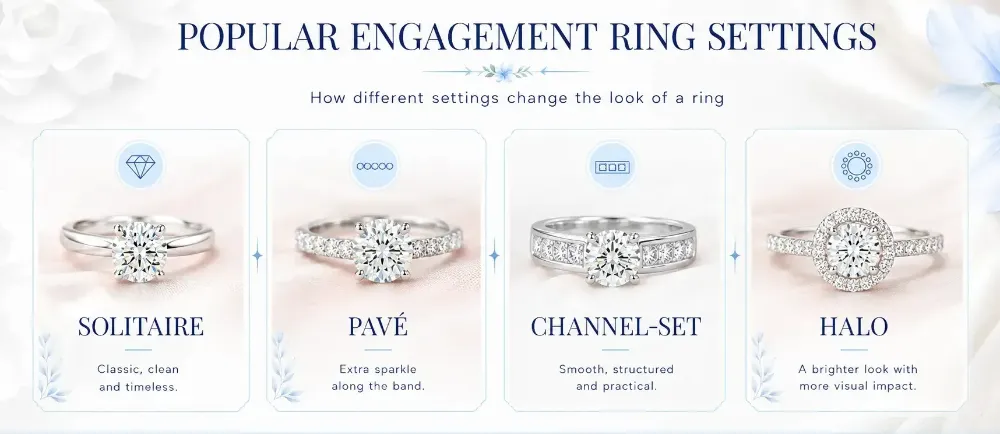
The same center stone can look completely different depending on how it is set.
A solitaire leaves the stone visually open and makes it the clear focal point. Pavé adds small stones along the band, creating a more detailed and luminous appearance. Halo settings surround the center stone and can make the overall centerpiece look larger.
GIA’s current setting guide emphasizes that settings influence not only appearance, but also light performance, gemstone security and everyday wearability.
Pave engagement rings work particularly well for someone who likes romantic or detailed jewelry. Channel settings create a more structured effect because smaller stones sit between parallel metal walls rather than being individually exposed.
For example, MomentWish’s channel set engagement ring combines a 1-carat round moissanite center with 16 smaller round stones set along the band. Its four-prong center and channel accents create sparkle without making the whole design feel overly ornate.
Pay Attention to the Band
The band is easy to overlook, but it strongly affects the personality of the ring.
A thin straight band feels minimal and lets the center stone appear more prominent. A wider band creates more visual strength. Split-shank bands add structure, while twisted or vine-inspired bands introduce movement and symbolism.
A twisted band can suggest two paths becoming one, which is why this style often feels especially suitable for engagement jewelry.
MomentWish’s twisted pavé design uses a curved vine-like band with side-heart details, creating a softer alternative to a straight solitaire.
If your partner often wears simple rings, avoid choosing an extremely elaborate band just because it photographs well. Comfort and familiarity matter when the ring will be worn every day.
Match the Ring to Their Lifestyle
A ring can suit someone aesthetically but still be inconvenient for their daily routine.
If your partner works with their hands, wears gloves frequently or plays sports, lower-profile settings and smoother bands may be easier to manage. GIA specifically recommends considering lifestyle when choosing a setting because raised prongs and intricate details can require more maintenance.
Someone who wants maximum sparkle and does not mind more careful maintenance may love halo or pavé. Someone who values simplicity may prefer solitaire or channel-set styles.
| Partner Style | Good Starting Point | Why |
|---|---|---|
| Minimalist | Solitaire | Clean and easy to pair |
| Romantic | Pavé or twisted | Soft detail and extra sparkle |
| Classic | Round solitaire | Timeless and familiar |
| Glamorous | Halo | Strong visual impact |
| Practical | Channel-set | Smooth, structured accents |
| Individualistic | Custom or mixed-shape | More personal and distinctive |
Think About the Wedding Band Early
An engagement ring does not exist in isolation forever.
If your partner plans to wear a wedding band beside it, check how the two rings will sit together. Some engagement designs allow a straight wedding band to sit flush, while others may need a curved or contoured band.
GIA recommends thinking about setting design and overall ring construction early because these choices influence future pairing and wear.
This is also where a custom moissanite engagement ring can make sense. Customization may involve engraving, adjusting the band, selecting a specific center shape or creating a design around an existing wedding-band preference.
When in Doubt, Choose Balance
You do not need to identify every hidden preference your partner has.
If you know they like classic jewelry, start with a round stone. If they love sparkle, add pavé or channel accents. If they prefer symbolic jewelry, consider twisted or three-stone designs. If they value individuality, explore customization.
MomentWish’s guide to what moissanite is and how to choose a moissanite ring also recommends considering stone shape, setting style, metal and daily lifestyle together instead of making the decision based on one feature alone.
The right engagement ring should not look like the “best” ring on the internet.
It should look like your partner.
FAQ
1. How do I choose an engagement ring without asking my partner?
Study the jewelry they already wear, especially their preferred metal, ring width, gemstone shape and level of sparkle.
2. Is a round engagement ring a safe choice?
Yes, round stones are timeless and versatile, especially for someone who prefers classic jewelry.
3. Are pavé engagement rings good for everyday wear?
Yes, but their small accent stones and detailed settings may require more careful cleaning and inspection.
4. What setting is best for an active lifestyle?
Lower-profile, smoother settings such as channel-set or more protective designs are generally easier for frequent daily activity.
5. Should the engagement ring match the wedding band?
It does not have to match exactly, but considering how the two rings sit together can prevent fit problems later.