-RGB.jpg?w=1413&h=279)
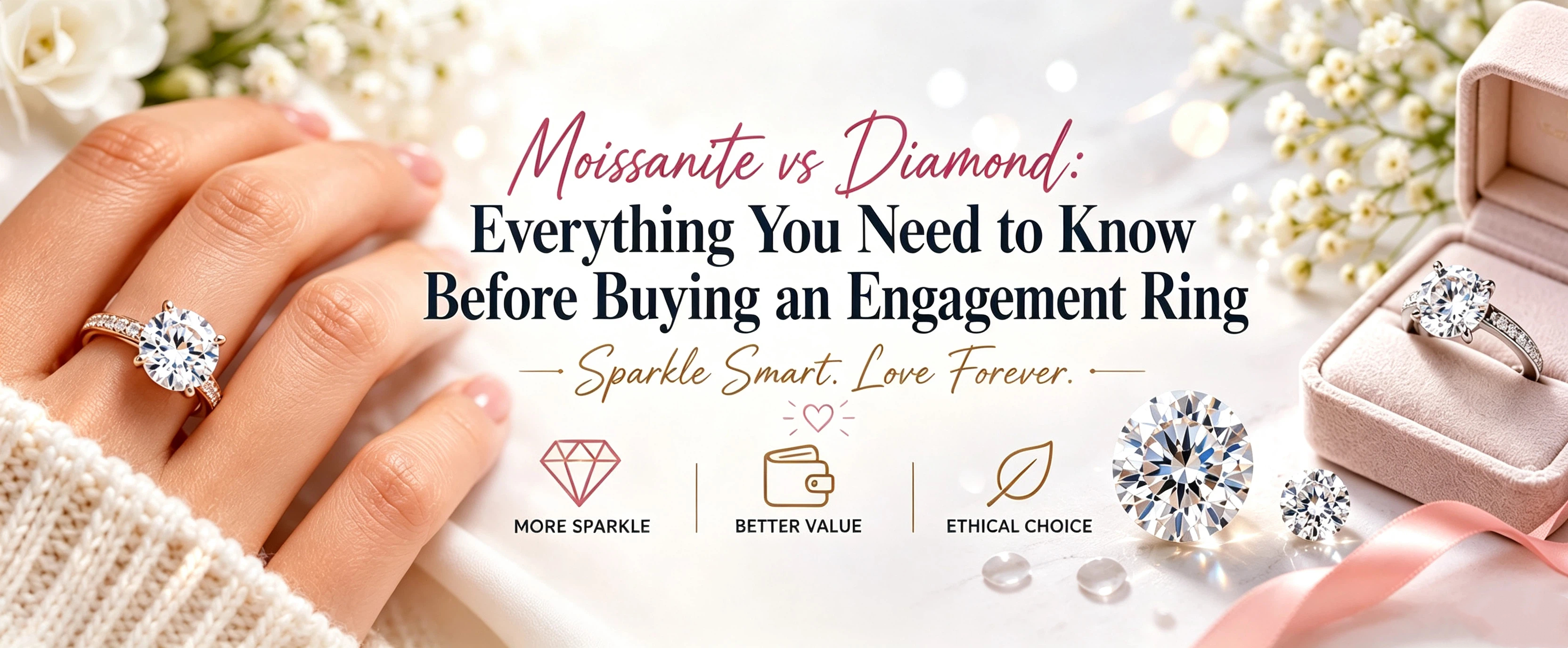
If you've recently been shopping for engagement rings, you've probably come across the word moissanite. Over the past few years, moissanite has become one of the fastest-growing alternatives to traditional diamonds, especially among younger couples looking for exceptional sparkle without the premium price tag.
But what exactly is moissanite? How does it compare to natural diamonds and lab-grown diamonds? And perhaps most importantly—is it actually worth buying?
Let's take a closer look at the advantages, disadvantages, and key differences so you can make the right choice for your budget, lifestyle, and personal preferences.
What Is Moissanite?
Moissanite is a gemstone originally discovered in a meteor crater by French scientist Henri Moissan in 1893. Natural moissanite is incredibly rare, so nearly all modern moissanite used in jewelry today is laboratory-created.
Although it looks very similar to a diamond, moissanite is a completely different gemstone with its own unique chemical structure and optical properties.
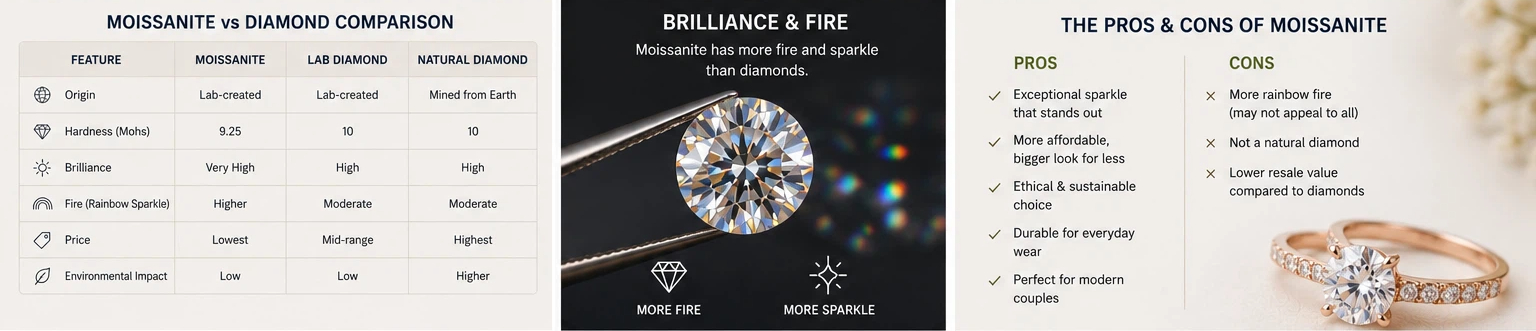
One reason why moissanite has become so popular is its exceptional brilliance. In fact, moissanite reflects more colorful light (fire) than a diamond, creating a dazzling sparkle that many wearers love.
For couples searching for affordable yet beautiful alternatives to traditional diamonds, moissanite engagement rings have become one of the most popular choices in recent years.
Moissanite vs Natural Diamond
Natural diamonds are formed deep within the Earth's mantle over billions of years. Their rarity is one reason they command such high prices.
Moissanite, on the other hand, is lab-created and significantly more affordable.
Here are the main differences:
| Feature | Moissanite | Natural Diamond |
|---|---|---|
| Origin | Lab-created | Naturally mined |
| Hardness | 9.25 Mohs | 10 Mohs |
| Brilliance | Higher fire | Classic white sparkle |
| Price | Budget-friendly | Premium pricing |
| Sustainability | Excellent | Varies by source |
| Rarity | Manufactured | Naturally rare |
Many Reddit discussions in engagement ring communities reveal that buyers often choose moissanite because they prefer spending money on experiences, homes, or weddings rather than paying a premium for a mined diamond.
However, some buyers still value the rarity and long-term prestige associated with natural diamonds.
Moissanite vs Lab-Grown Diamond
One of the most common questions on Reddit is:
"Should I buy moissanite or a lab-grown diamond?"
The answer depends on what matters most to you.
Lab-grown diamonds are chemically identical to mined diamonds. They test as real diamonds because they are diamonds.
Moissanite is not a diamond. It is its own gemstone.
If your goal is owning a genuine diamond at a lower price, lab-grown diamonds may be appealing.
If your goal is maximizing size, brilliance, and value for money, moissanite often wins.
For many shoppers, especially first-time buyers of engagement rings, the visual differences are almost impossible to notice without professional equipment.
The Advantages of Moissanite
1. Exceptional Sparkle
One of moissanite's biggest selling points is its brilliance.
Moissanite has a refractive index of approximately 2.65–2.69, higher than a diamond's 2.42. This means more light dispersion and more rainbow flashes.
Many women specifically choose moissanite because they love its eye-catching sparkle.
2. Affordable Luxury
A large moissanite stone can cost only a fraction of a similarly sized diamond.
This allows buyers to choose larger center stones or more elaborate settings without exceeding their budget.
For example, many engagement rings for women featuring moissanite offer the appearance of a luxury diamond ring at a much more accessible price.
3. Durable for Daily Wear
With a hardness rating of 9.25 on the Mohs scale, moissanite is highly resistant to scratching and suitable for everyday jewelry.
This makes it an excellent option for engagement rings that are worn daily.
The Potential Downsides of Moissanite
No gemstone is perfect, and moissanite has a few drawbacks buyers should understand.
More Rainbow Fire
Some people love the colorful flashes produced by moissanite.
Others feel it looks less natural than a traditional diamond, especially under bright lighting.
Limited Resale Value
Like most jewelry, moissanite does not typically retain strong resale value.
However, this is also increasingly true for many lab-grown diamonds.
Not a Diamond
For buyers who specifically want the symbolism or rarity of a diamond, moissanite may not fully satisfy that desire.
This is one of the most frequently discussed concerns in Reddit engagement ring forums.
Who Should Buy Moissanite?
Moissanite is ideal for:
- Budget-conscious couples
- Eco-conscious shoppers
- Buyers who prioritize sparkle
- People who want larger stones
- Modern consumers seeking value
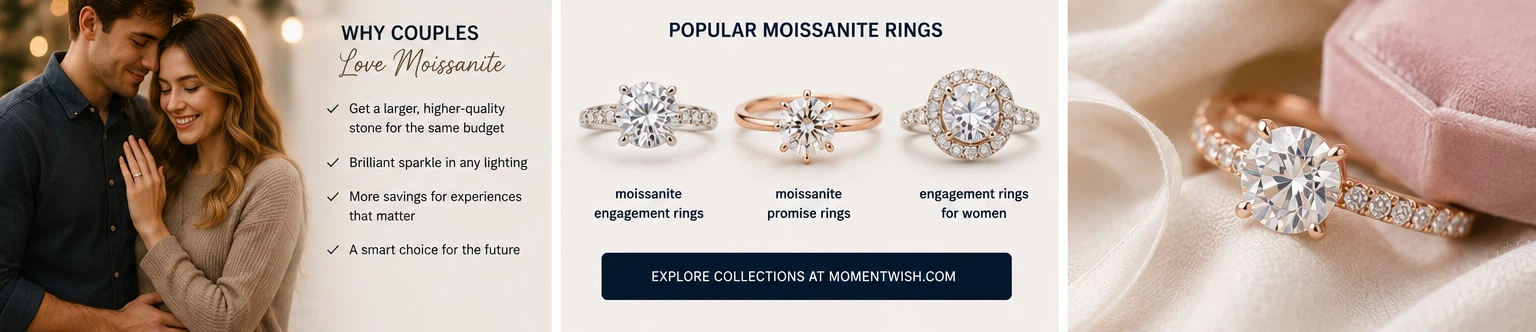
If you're shopping for a meaningful commitment ring before engagement, moissanite promise rings provide an elegant and affordable option.
More couples today are choosing moissanite not because they can't afford diamonds, but because they intentionally prefer the value proposition.
Is Moissanite Worth Buying?
For most modern jewelry buyers, the answer is yes.
Moissanite delivers outstanding brilliance, durability, affordability, and ethical sourcing. While it isn't a diamond, it doesn't try to be one.
Instead, moissanite has established itself as a beautiful gemstone in its own right.
If your priorities are beauty, practicality, and value, moissanite is one of the smartest jewelry purchases available today.
For additional gemstone information, the Gemological Institute of America (GIA) offers educational resources about gemstones and diamond alternatives.
You can also explore our complete moissanite collection to discover engagement rings, promise rings, necklaces, and timeless jewelry designed for everyday elegance.
FAQ
1. Is moissanite a real gemstone?
Yes. Moissanite is a genuine gemstone with its own unique properties, although it is not a diamond.
2. Can people tell the difference between moissanite and diamond?
Most people cannot distinguish them without magnification or gemological testing.
3. Does moissanite get cloudy over time?
No. High-quality moissanite maintains its brilliance and clarity for decades.
4. Is moissanite suitable for engagement rings?
Yes. Its durability and sparkle make it one of the most popular engagement ring stones today.
5. Is moissanite better than a lab-grown diamond?
Neither is objectively better; the choice depends on whether you prioritize diamond authenticity or value and brilliance.